What Is Cold Brew Coffee?
Cold brew is defined by process, not temperature. Here's what makes it different — and why it matters.
The Basics
Cold brew is a method of making coffee — not a flavour, not a temperature, not a type of bean. It is defined entirely by how it is made: coffee grounds steeped in cold or room-temperature water for an extended period, typically 12 to 24 hours. No heat. No pressure. Just time.
This distinguishes it fundamentally from every other common coffee preparation. Espresso uses high pressure and near-boiling water to extract coffee in under a minute. Drip coffee runs hot water through grounds in a matter of minutes. Even French press, often thought of as a slow method, is finished in four minutes. Cold brew operates on a completely different timeline.
Why Cold Water Changes Everything
Heat is coffee's most powerful extraction tool. It accelerates the release of flavour compounds, oils, and acids from the grounds. But it extracts indiscriminately — it pulls out the smooth, sweet compounds and the sharp, acidic ones in roughly equal measure.
Cold water extracts more selectively. It draws out the same flavourful compounds but leaves many of the bitter oils and acidic molecules behind. The result is a coffee that is smoother, less bitter, and naturally lower in acidity than hot-brewed equivalents — often perceived as sweeter, even without sugar.
The science is well established. Cold brew typically has 60 to 70 percent less acidity than hot-brewed coffee. For people who find coffee hard on their stomach, or who simply dislike the sharpness of a standard drip, cold brew removes the problem at its source.
How It's Made
The process is simple. Coarse coffee grounds are combined with cold, filtered water — typically at ratios between 1:4 and 1:8, depending on whether you're making a concentrate or a ready-to-drink product. The mixture steeps for 12 to 36 hours, then is filtered to remove the grounds. What remains is cold brew.
NORSE steeps for up to 24 hours in controlled conditions. The water, the grind, the time, and the ratio are all dialled in. The result is consistent batch to batch — something harder to guarantee when you introduce heat as a variable.
Concentrate vs Ready-to-Drink
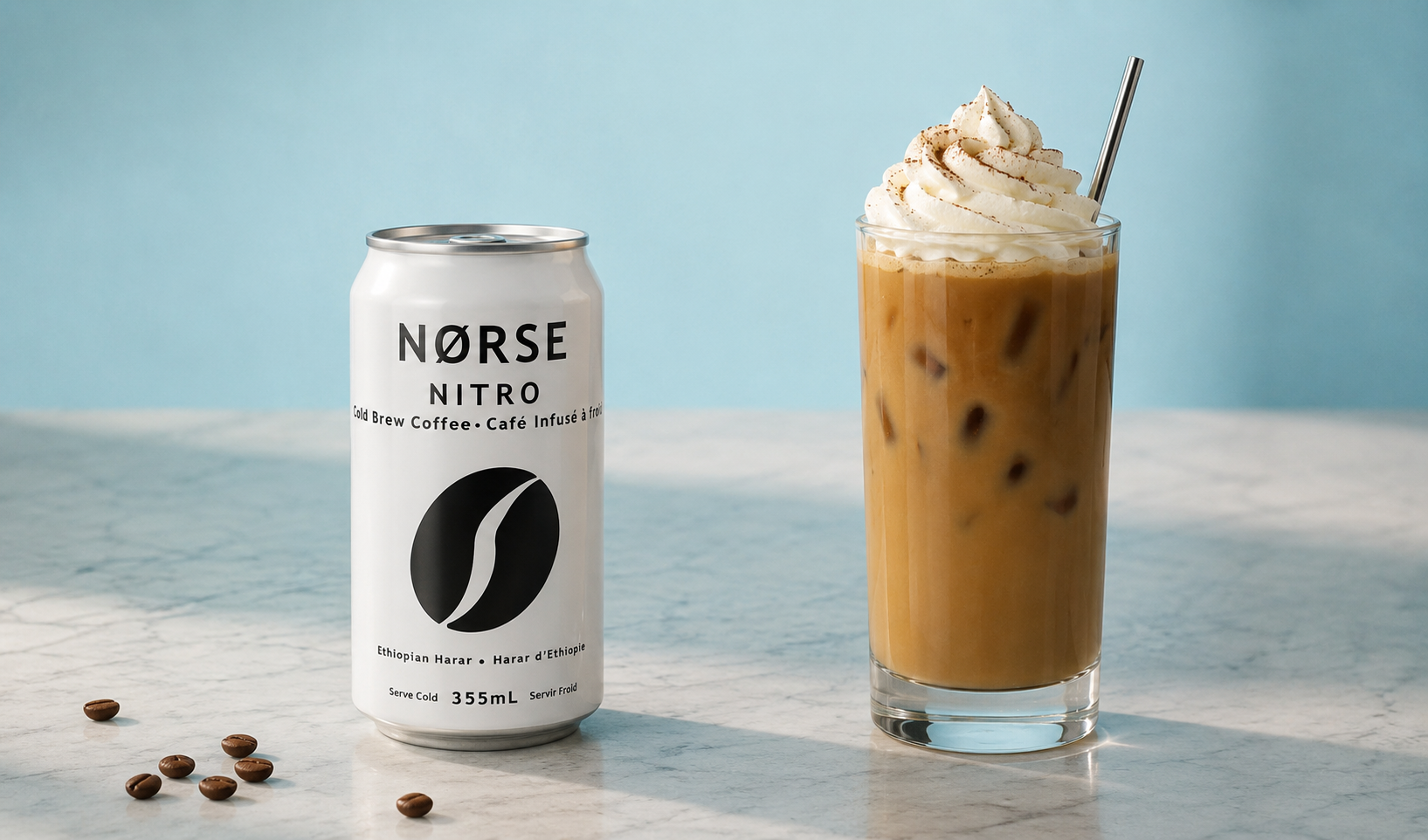
Most cold brew exists in one of two forms: ready-to-drink (RTD) or concentrate. RTD cold brew is diluted to drinking strength before bottling or canning — crack it open and it's ready. NORSE's nitro RTD cans fall into this category.
Cold brew concentrate is produced at a much higher coffee-to-water ratio and is intended to be diluted before drinking. NORSE's 8:1 concentrate means you mix one part concentrate with eight parts water, milk, or other liquid. This format offers significantly more flexibility — it can be drunk as cold brew, used as an espresso substitute in cocktails, or incorporated into recipes.
The Bottom Line
Cold brew is not a trend. It is a well-understood extraction method with a flavour profile that is genuinely different from hot-brewed coffee — smoother, less acidic, more naturally sweet. Whether you prefer it straight, over ice, in a cocktail, or mixed into a dessert, understanding what cold brew actually is makes every cup a more intentional choice.
NORSE Cold Brew
Can’t find what you’re looking for?